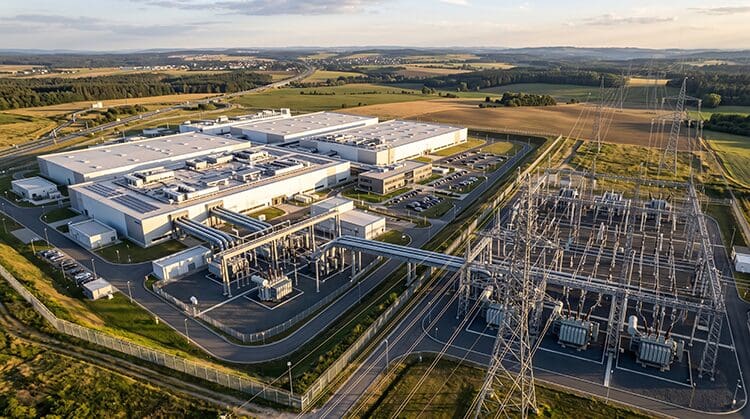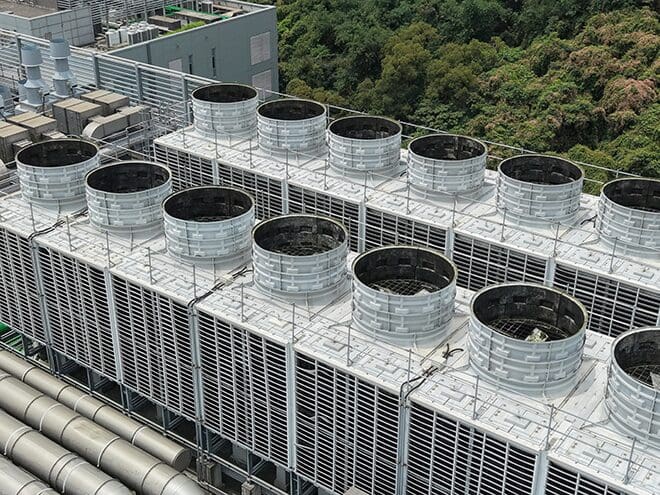
The objective is controlled scalability: more engineering throughput without weakening configuration control, safety, product quality or test rigor.
Demand reaches engineering before it reaches the line
For critical power and cooling equipment, each order may trigger application review, configuration, calculations, electrical or mechanical design, controls changes, sourcing decisions, customer submittals, production support, test procedures, and site questions. A growing order book therefore creates an engineering load well before manufacturing begins.
Capacity planning should translate the commercial forecast into engineering hours by product family and workflow. Order count alone is not enough. A small number of highly customized projects can consume more capacity than a larger group of standard configurations.
Build capacity at four levels
- Product architecture: increase reuse through modular designs, approved options and clear configuration rules.
- Workflow design: define standard inputs, review gates, handoffs and escalation paths for each recurring engineering process.
- Resource model: combine product owners and approvers with scalable design, documentation, coordination, and test capacity.
- Operating visibility: measure queues, aging, rework, approval velocity, and forecasted load by discipline.
Create product-aligned engineering cells
A product-aligned cell brings together the recurring skills needed to move a product family from application through release and test. The cell may include applications, electrical, mechanical, controls, manufacturing, and documentation support, with access to designated technical authorities.
This structure reduces handoff time and makes workload visible. It also supports cross-training because team members see the full order path. Cells should use common standards and governance so speed does not create inconsistent engineering practices.
Scale the edges of the workflow
Flexible capacity works best where scope, inputs, and acceptance criteria can be defined. Examples include CAD production, drawing conversion, bills of material, routine calculations, technical documentation, project coordination, manufacturing support, and test execution under controlled procedures.
Keep safety-critical decisions, novel architecture, final approval, and complex deviations with qualified authorities. The boundary should be explicit. Added capacity expands the system only when review responsibility and configuration control remain clear.
Protect validation and factory testing
Under schedule pressure, testing can become a downstream queue or a target for compression. That is risky for equipment expected to perform in mission-critical environments. Test engineering, instrumentation, controls support, quality documentation and issue resolution all need capacity plans tied to the production forecast.
Track first-pass yield, retest drivers, issue aging, and vendor witness availability. Use recurring defects as inputs to design and manufacturing improvement, not just as isolated test events.
Capacity review checklist
- Forecast engineering hours by product family and customization level.
- Identify approval points with fewer than two qualified owners.
- Set maximum queue-age targets for submittals and releases.
- Define work packages that can scale without transferring authority.
- Align test capacity with the production schedule.
- Review rework causes and feed them back into standards.
Final perspective
Critical-power and cooling manufacturers do not need to choose between growth and engineering discipline. A structured capacity system can protect technical authority while expanding the repeatable work around it, improving throughput and reducing the strain that creates quality and schedule risk.
Sources and further reading
- U.S. Department of Energy, “DOE Releases New Report Evaluating Increase in Electricity Demand from Data Centers”. https://www.energy.gov/articles/doe-releases-new-report-evaluating-increase-electricity-demand-data-centers
- U.S. Department of Energy, “Best Practices Guide for Energy-Efficient Data Center Design”. https://www.energy.gov/sites/default/files/2024-07/best-practice-guide-data-center-design_0.pdf
- ASHRAE, “Data Center Resources”. https://www.ashrae.org/technical-resources/bookstore/datacom-series
- ASHRAE, “Water-Cooled Servers: Common Designs, Components, and Processes”. https://www.ashrae.org/file%20library/technical%20resources/bookstore/whitepaper_tc099-watercooledservers.pdf
- Sterling Engineering, “Data Center”. https://www.sterling-engineering.com/data-center/